A dark stain spreading across the ceiling, a slow drip into a bucket, paint bubbling overhead: a ceiling water leak in Dhaka is one of the most stressful problems an apartment owner or tenant can face. The first instinct is to wipe it, patch it or repaint it. That is usually a mistake. Until you know where the water is coming from, any repair is a guess, and the leak comes back.
This guide explains what to do in the first hour, how to work out where the water is coming from, what not to do, and when to call a plumber. It is written for Dhaka apartments, where the leak often starts in a bathroom, pipe or roof you cannot see.
First steps when you notice a ceiling leak
Do these things before anything else:
- Keep away from the wet area. If the ceiling is bulging, sagging or dripping heavily, do not stand under it. Move furniture, rugs and electronics out of the way and put a bucket under the drip.
- Think about electricity. Water and wiring are a dangerous mix. If water is near a light, fan or switch, turn off the power to that area at the main circuit breaker (MCB) and do not touch wet fittings.
- Take photos and a short video. Note the date and time, the size of the stain and whether it is wet or dry. This helps a technician, and it helps if you need to talk to a neighbour or building management.
- Note when it happens. Does it drip all day, only after rain, or only when someone upstairs uses water? This is the most useful clue you have.
Common causes of a ceiling water leak in Dhaka apartments
In most buildings, a ceiling leak comes from one of these sources:
- A leaking pipe in the flat above. Water supply pipes and drain pipes can crack, loosen at joints or corrode over time, especially in older buildings.
- A damaged bathroom floor above. Cracked tiles, worn grout or failed waterproofing under a bathroom floor let water seep down into the ceiling below.
- Appliance hoses and drains. A washing machine hose or kitchen sink drain upstairs can leak slowly for weeks.
- Rain coming through the roof, terrace or balcony. Cracks in terrace waterproofing, blocked rainwater outlets and gaps around windows and exterior walls can let water in, especially during and after the monsoon.
- An AC drain pipe. A blocked or loose air conditioner drain can drip water that looks like a ceiling leak. If the stain is near an AC unit, read our AC servicing guide.
- Hidden pipes in walls and false ceilings. Water can travel along a pipe or beam and appear metres away from the real leak.
How to find the source: a simple step-by-step check
You do not need special tools for the first round of checks. Work through these in order.
1. Look at the pattern and timing
| What you see | Likely source |
|---|---|
| Drips only during or after rain | Roof, terrace, balcony or exterior wall |
| Drips all the time, rain or dry weather | Water supply pipe or drain pipe |
| Drips only when someone uses water upstairs | Drain, bathroom floor or appliance hose |
| Stain near an AC unit | AC drain pipe or condensation |
| Musty or sewage smell | Drain line leak |
| Stain slowly growing with a brown ring at the edge | Repeated wetting from a slow leak |
Use this as a guide, not a diagnosis; causes can overlap.
2. Ask the flat above to help
If you live in an apartment building, speak to the people upstairs politely and ask them to run water in one place at a time: first the bathroom tap, then the shower, then the toilet flush, then the kitchen sink, then the washing machine. Watch your ceiling after each one. If the drip starts or gets worse, you have found the fixture or pipe.
3. Try the main valve test
If your flat has its own main water valve, close it for a short time and watch the leak.
- If the dripping slows or stops, the leak is probably on a supply line carrying water under pressure.
- If it keeps dripping, the source is more likely a drain line, rainwater, an AC drain or water already trapped in the ceiling.
Remember to open the valve again afterwards.
4. Check the roof, terrace and balcony after rain
If the leak appears only after rain, check the area directly above: the terrace surface, the corners and edges, rainwater outlets and gaps around window frames. Blocked outlets can let water stand and force its way in through cracks.
5. Look for signs that a leak is hiding
A leak may be hidden if you notice:
- a stain that grows even though nothing is dripping
- paint bubbling or peeling
- a damp or musty smell
- damp patches on the walls near bathrooms and kitchens
Our guide on home maintenance tips for Dhaka lists these warning signs along with a seasonal checklist.
What not to do
- Do not paint over the stain. Paint will not stop the water. The patch will bubble, stain again and hide the real damage.
- Do not seal or plaster blindly. Covering the visible spot can trap water inside the ceiling and make the damage worse.
- Do not break open the ceiling at random. You may damage wiring or pipes. Let a technician decide where to open.
- Do not ignore a small leak. A slow leak damages plaster, steel reinforcement and wiring over time, and mould can grow in damp areas.
The right order for a proper repair
A lasting repair follows four steps:
- Find and stop the source. Repair or replace the damaged pipe, hose, joint or waterproofing, or clear the blocked drain.
- Let the area dry. Ventilate the room and allow the ceiling and walls to dry fully. Drying time varies with the amount of water and the airflow.
- Repair the damage. Fix cracked plaster, damaged false ceiling panels or rusted fittings.
- Prime and repaint. Repaint only when the surface is completely dry, using a suitable primer and paint for damp-prone areas.
If you skip step 1 or 2, the stain will return. Plumbing problems come first; painting and finishing come last.
Who is responsible for the repair?
In an apartment building, it depends on where the leak starts. If it comes from a pipe, bathroom or appliance in the flat above, tell the owner or tenant upstairs and share your photos. If it comes from the roof, shared pipes or building structure, inform your building management or owners’ association. Check your building rules or rental agreement for who pays for what.
When to call a plumber for a ceiling water leak
Call a professional plumber if:
- you cannot find the source after the basic checks
- water keeps coming in after you close the main valve
- the ceiling is sagging, bulging or stained over a large area
- the leak is near wiring, lights or the distribution board
- you suspect a pipe inside a wall or false ceiling
- the same ceiling has been repaired and painted before and the stain returned
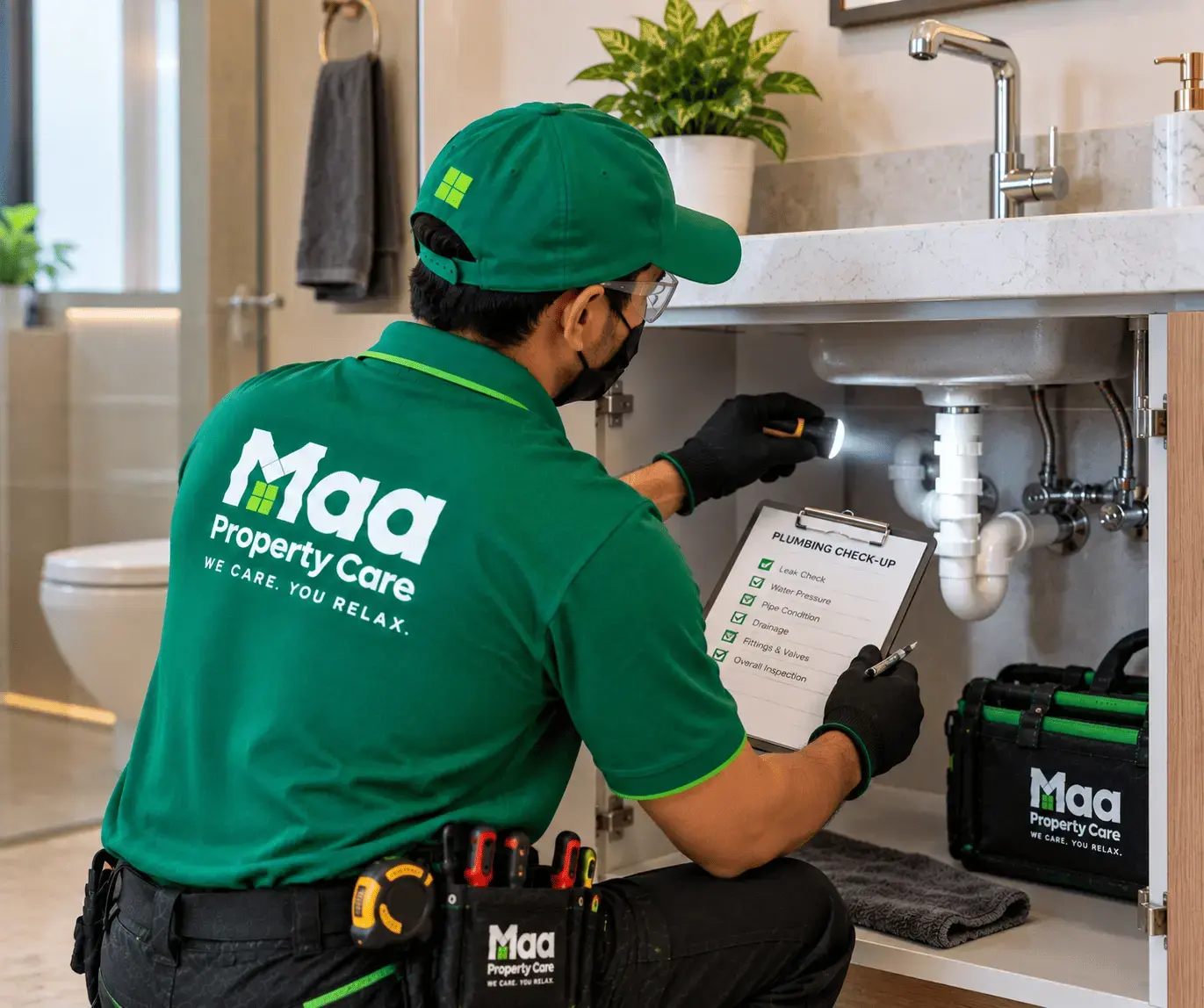
A technician can inspect pipes, bathroom floors and drains, trace the source and fix it, so you repair the cause instead of the symptom. At Maa Property Care, a plumbing check-up is a good starting point, and our plumbing service handles the repair. We serve Dhanmondi, Lalmatia and nearby areas of Dhaka.
Frequently asked questions
1. Who is responsible if the leak comes from the flat above?
It depends on the source and your building’s rules. A leak from a pipe, bathroom or appliance upstairs is usually reported to the owner of that flat, while shared pipes or roof leaks go to building management. Share clear photos and agree on the repair early.
2. Can I just repaint the stain?
Repainting without fixing the source only hides the problem. Fix the leak first, let the ceiling dry, repair the plaster, and then repaint.
3. How long does a wet ceiling take to dry?
It varies with how much water got in, how long the leak lasted and how well the room is ventilated. Do not repaint until the surface feels dry and the stain has stopped growing.
4. Is a ceiling leak dangerous?
It can be. Water near wiring is an electrical risk, a sagging ceiling can fall, and long-term damp encourages mould. Stay away from wet areas and switch off power near the leak if necessary.
5. Why does the stain come back after repainting?
Usually because the source was never fixed, or the ceiling was not dry when it was painted.
Need help with a ceiling water leak in Dhaka?
Do not wait for a small stain to become a big repair. Book a plumbing check-up, message us on WhatsApp or call +8801351156827, and we will help you trace the source and fix it properly.