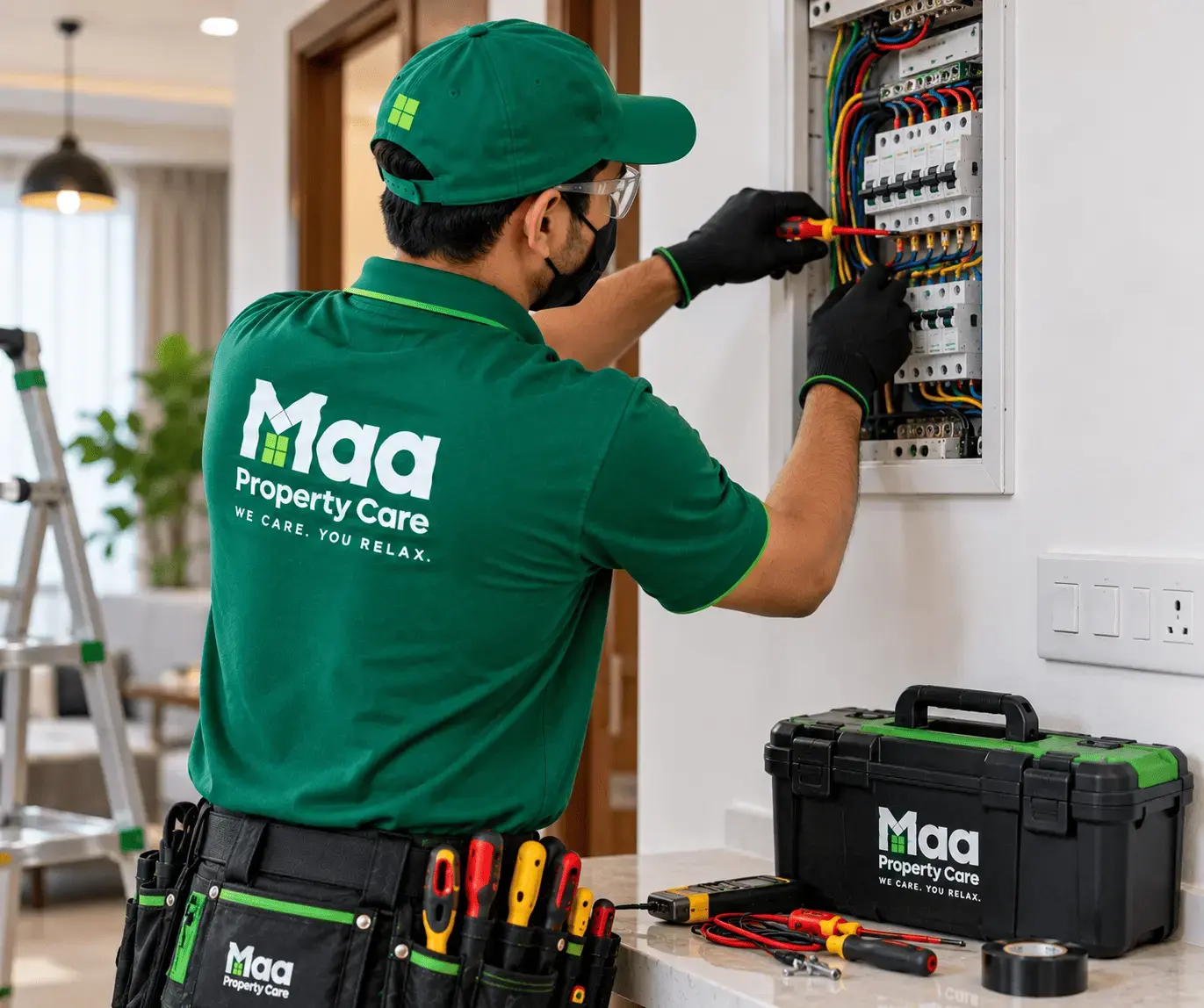
A light that flickers now and then can feel like a small annoyance. Sometimes it is just an old bulb. Sometimes it is a warning that a connection is loose, a circuit is overloaded or wiring is damaged, and those problems can lead to electrical faults or fire. Knowing the common flickering lights causes helps you tell the harmless cases from the dangerous ones, and decide what is safe to check yourself and what must be left to an electrician.
This guide, written for Dhaka homes and apartments, explains the main causes, the safe quick checks, the warning signs and when to call a professional.
Common flickering lights causes in Dhaka homes
Flickering can start at the bulb, the switch, the wiring or the electricity supply. Here are the usual flickering lights causes, from the least to the most serious:
| Cause | Usually harmless? | What to do |
|---|---|---|
| Loose or worn-out bulb | Yes | Switch off, let the bulb cool, tighten or replace it |
| Old tube light, starter or ballast | Yes | Replace the tube or starter; replace the ballast if the problem continues |
| LED bulb on an incompatible dimmer | Usually | Use LED-compatible bulbs and dimmers |
| Worn or faulty switch | Not always | Have the switch replaced by an electrician |
| Large appliance starting (AC, pump, geyser) | Sometimes | Brief dimming can happen; frequent or strong dimming needs a check |
| Voltage fluctuation from the supply | Not in your control | Check with neighbours; contact your electricity supplier if it is widespread |
| Overloaded circuit | No | Reduce the load and call an electrician |
| Loose connection in a fitting, socket or breaker | No | Call an electrician promptly |
| Damaged or ageing wiring | No | Call an electrician promptly |
Use the table as a guide; causes can overlap.
Bulb, tube and switch problems
The most common cause is the simplest: a bulb that is loose in its holder, a bulb near the end of its life, or a tube light with a weak starter. A cheap LED bulb, or an LED on a dimmer that does not support it, can also flicker or buzz. A worn switch can make a light blink when you touch it.
Large appliances starting
When an air conditioner, water pump, refrigerator or geyser starts, it draws extra current for a moment, and lights may dim briefly. A very short dip now and then is common in many homes. If the dimming is strong, happens often or affects the whole home, the circuit may be overloaded or the wiring or connections may be weak. Our AC servicing guide covers keeping your AC in good condition.
Supply fluctuation
If lights flicker across your whole building at the same time, or the flicker comes with load changes or generator and IPS switching, the cause may be outside your home. Ask your neighbours. If they see the same thing, report it to your electricity supplier.
Loose connections and damaged wiring
A loose wire at a switch, socket, light fitting or circuit breaker can create a poor connection that sparks or heats up. Old wiring, damaged insulation and overloaded extension boards add to the risk. These are the cases that need an electrician, because loose connections can overheat and cause fires.
Quick checks you can do safely
Only do the checks below. They do not involve opening any electrical fitting.
- Find the pattern. Is it one bulb, one room or the whole home? Does it happen when a certain appliance starts, at a certain time, or when you touch a switch?
- Switch off and replace the bulb. Turn the light off, let the bulb cool and make sure your hands are dry. Tighten it or swap in a bulb of the same type and wattage that you know works.
- Check the dimmer. If the light is on a dimmer, make sure the LED bulb is compatible.
- Move the bulb. Try the bulb in another fitting. If the flicker follows the bulb, replace it. If it stays with the fitting, the problem is the fitting or wiring.
- Ask the neighbours. If the whole area flickers, it is likely a supply issue.
If the flicker continues after these checks, stop and call an electrician.
Warning signs that need prompt attention
Call an electrician quickly if you notice any of these along with flickering:
- a burning smell near a switch, socket, fitting or distribution board
- buzzing, crackling or sizzling sounds
- warm switches or sockets, or a discoloured or scorched plate
- sparks
- a circuit breaker (MCB) that trips again and again
- flickering in several rooms at once
- lights that get brighter in one room while dimming in another
- a tingling or small shock when you touch a switch or appliance
If you smell burning or see sparks, switch off the power at the main breaker if you can do so safely, stay away from the fitting and call an electrician. If there is smoke or fire, leave the building and call 999.
What not to do yourself
- Do not open a switchboard, distribution board or wall socket. Live parts can cause serious shocks.
- Do not tape over bare wires or loose connections as a permanent fix.
- Do not replace a tripping breaker with a larger one. The breaker is protecting the wiring.
- Do not overload extension boards. Plugging many appliances into one board is a common cause of overheating.
- Do not work on electrical items with wet hands or while standing in water.
What an electrical check-up covers
A professional electrical check-up looks for the cause instead of guessing. A technician typically inspects switches, sockets, light fittings, circuit breakers and visible wiring, checks for loose connections and overheating, and looks at whether the load on circuits is safe. They then recommend what to repair or replace. The exact work depends on the service and your home, so see the details on our electrical check-up page. If the problem is a breaker, our MCB servicing service can help, and for a faulty fitting, see light servicing and installation.
A yearly check is a sensible habit, and more often in an older building or after a renovation. Our home maintenance tips for Dhaka guide includes an electrical section and a seasonal checklist.
When to call an electrician
Call a qualified electrician if:
- the flicker continues after the safe checks above
- more than one light or room is affected
- you notice any warning sign from the list
- a breaker trips repeatedly
- water has leaked near wiring, lights or switches
- you plan to add a heavy appliance such as an AC or geyser
- your building is old and the wiring has never been checked
At Maa Property Care we serve Dhanmondi, Lalmatia and nearby areas of Dhaka.
Frequently asked questions
1. Are flickering lights dangerous?
It can be. An old bulb is harmless, but flickering caused by a loose connection, an overloaded circuit or damaged wiring can lead to overheating and fire. If you see warning signs, treat it as urgent.
2. Why do lights flicker when the AC starts?
Large appliances draw extra current when they start, which can briefly dim the lights. A short, mild dip can be normal, but strong or frequent dimming suggests an overloaded circuit or weak wiring and should be checked.
3. How often should wiring be checked?
There is no single rule, but a yearly check is a sensible habit, and more often for an older building or after renovation.
Need an electrician in Dhaka?
Do not ignore a light that keeps flickering. Book an electrical check-up, message us on WhatsApp or call +8801351156827, and we will find the cause and fix it safely.